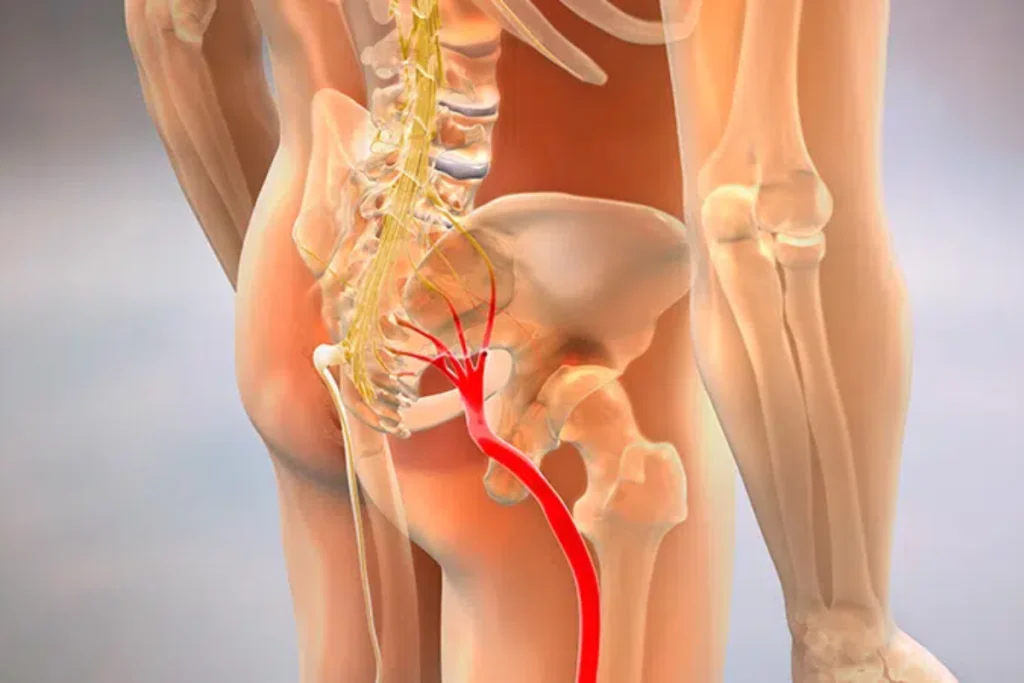
The sciatic pain occurs when the sciatic nerve is irritated or compressed. This nerve is the longest nerve in the body and runs from the lower back to the legs. When something presses on it, pain can be felt in the lower back, buttocks, thighs or even down to the foot.
Many people describe the sciatic nerve pain as a burning sensation, tingling, prickling or numbness. It may appear on only one side of the body and range from mild discomfort to severe pain that makes it difficult to walk or sit.
Why sciatica occurs
The sciatic pain is not a disease, but a symptom. Some common causes are:
- Herniated discs
- Wear and tear of the spine with the passage of time
- Prolonged poor posture
- Poorly executed loads or repetitive movements
- Lack of movement and muscle weakness
When the spine does not move properly or loses alignment, it can increase pressure on the sciatic nerve.
Most common symptoms
Among the most frequent symptoms of sciatic nerve pain are found:
- Pain down the back to one leg
- Tingling or numbness
- Weakness in the leg or foot
- Pain that gets worse when sitting for a long time
If these symptoms appear, it is important not to ignore them, especially if they recur frequently.
How chiropractic treatment helps
A chiropractor for sciatic pain evaluates how the spine is functioning and if there are areas that do not move well. The goal of chiropractic treatment is to reduce pressure on the nerve, improve movement and help the body recover.
The plan usually includes gentle adjustments, muscle work and posture recommendations. Everything is tailored to the individual's condition. In many cases, treatment helps reduce pain and restore mobility without the need for strong medications.
Exercises for sciatica in support of treatment
In addition to in-office treatment, the exercises for sciatica are an important part of recovery. These exercises aim to gently stretch the back and strengthen the muscles that support the spine.
It is important that the exercises are guided and appropriate for each case. Incorrect movements can worsen the sciatic pain, Therefore, professional guidance is always recommended.
In the blog you can read more on this subject
When to seek professional help
If the pain does not improve, if it increases over the days, if there is loss of strength or difficulty walking, it is important to seek evaluation. Early diagnosis can prevent the problem from becoming chronic.
According to reliable medical information, sciatica usually improves when the cause is identified and the appropriate treatment is applied.
Conclusion
The sciatic pain can affect daily life, but it does not have to control it. Understand what causes it and look for a chiropractor for sciatic pain can make a big difference. With the right plan, healthy habits and exercises for sciatica Many people are able to reduce pain and get back to moving more comfortably.