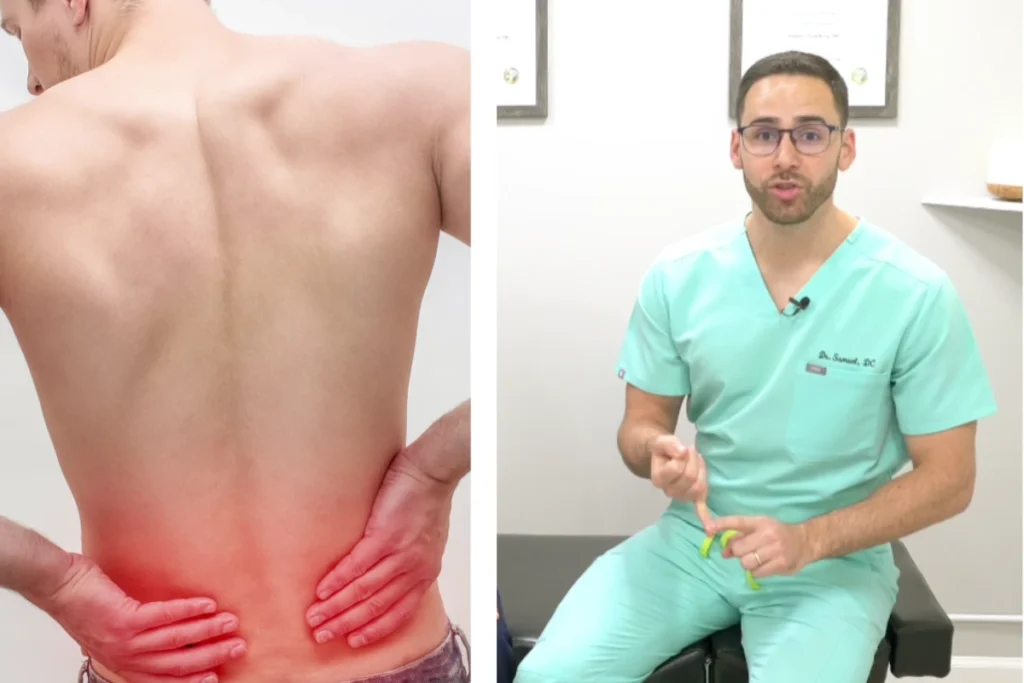
The low back pain that will not go away can feel like a “background noise”: it goes down a little, but comes back when you sit, bend over or sleep. Often there is not just one cause, but several small ones that add up. Here you will see causes of low back pain that are often ignored and what you can do to start improving.
Why it can become chronic low back pain
When the body feels irritation or poor stability, it tries to “protect” the area with tension. That tension limits movement and, as you move less, some muscles weaken. Over time, that cycle can turn an episode into a chronic low back pain.
Causes of low back pain that many ignore
1) Muscle and ligament overloading
It is not always a major injury. It can be carrying bags, cleaning, bending in a hurry, training without warming up or repeating the same effort several days. The area becomes fatigued and the pain stays.
2) Too many hours sitting
Sitting too much shortens the hips and reduces the gluteal work. Then, when you stand up or walk, the back ends up doing the effort that other parts of the body should be doing.
3) Lack of strength in the “center” of the body.
Abdomen, lower back and hips work as a natural belt. If they are weak, the lower back compensates and can appear low back pain that will not go away, especially when carrying weight or standing for long periods of time.
4) Stress and insufficient sleep
Stress increases muscle tension. Little sleep lowers the capacity for recovery. It does not “invent” pain, but it can make it more intense and constant.
5) Irritation of a joint or the disc
Sometimes the pain comes from a joint in the spine or an irritated disc. It may feel like stiffness or deep pain. If the pain travels down the leg, there is tingling or numbness, a professional evaluation is appropriate.
Simple steps for low back pain relief
- Walk in short, frequent stretches (often helps more than total rest).
- Apply local heat for 15-20 minutes to relax tension (if there is no recent blow with inflammation).
- Take breaks every 30-45 minutes if you work sitting down.
- Try gentle hip and gluteal stretches, without forcing the pain.
- Write down what makes it worse and what relieves it so that you can explain it clearly in consultation.
When not to wait
Seek prompt medical attention if there is fever, loss of strength, severe numbness, pain after a major blow, loss of bladder/bowel control, unexplained weight loss, or history of cancer.
Would you like to know if adjustments work to relieve low back pain? Check this ChiroDuo article
For general and reliable information on low back pain, see the WHO
Conclusion
The low back pain that will not go away usually has several roots: overloading, sitting, lack of strength, stress and, in some cases, spinal irritation. Understanding the causes of low back pain and moving safely is a good first step. If pain persists or warning signs appear, the most responsible thing to do is to have a professional evaluation.