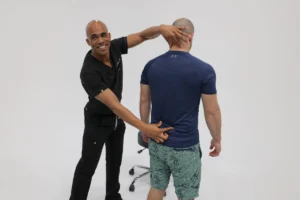
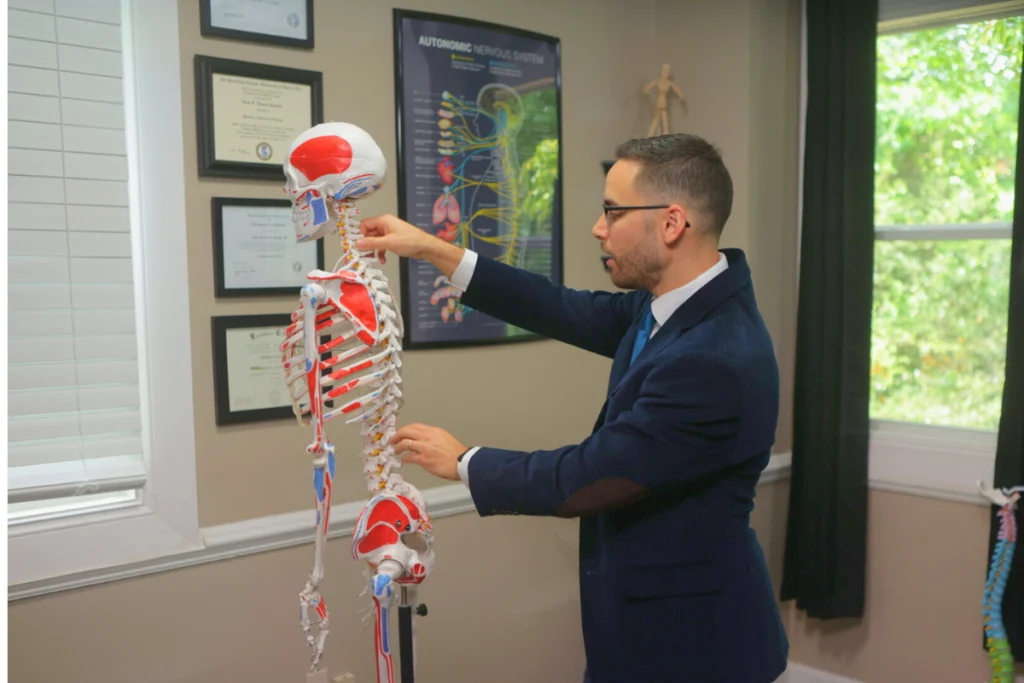
Search “Neck pain relief” It's completely understandable: neck pain affects sleep, work, concentration, and even mood. But in real life, the “cure” is rarely just one thing. In most cases, the most effective approach is a Neck pain treatment plan that matches education, movement, specific exercises and, when applied, manual therapy (like chiropractic) to achieve natural relief and reduce relapses.
In this blog you'll find:
- What does “cure” mean in realistic terms?
- Myths about pain cures that tend to worsen the problem
- A practical approach to neck pain treatment backed by clinical guidelines
- When to seek immediate medical attention
What does “cure for neck pain” really mean”
In a clinical setting, “cura” is usually translated as:
- Reduce pain and irritation
- Regain mobility
- Improve the function (to work, to drive, to sleep, to train)
- Prevent it from coming back with habits and strength
This aligns with clinical recommendations prioritizing conservative strategies such as education, exercise, and multimodal approaches; and reserving more complex studies or interventions for cases with red flags or persistent/neurological symptoms.American Academy of Family Physicians)
Red flags: when NOT to wait
There are situations where neck pain needs to be evaluated more urgently, for example, if there is:
- Marked weakness or progressive worsening in arm/hand
- Numbness or tingling that increases
- Pain after major trauma
- Concerning systemic symptoms (such as fever) or pain that is “different” from usual
These “red flags” are part of the standard clinical evaluation to avoid overlooking serious diagnoses.
Myths about cures for (neck) pain that should be avoided
Myth 1: “One session is all it takes for a permanent cure.”
Quick relief can be felt, but if the trigger remains the same (screens, stress, poor ergonomics, repetitive loads), the pain usually returns. This is why an approach is recommended multimodal that includes exercises and education, not just one-off intervention.
Myth 2: “The more I stretch, the better”
Stretching can help, but not always. If there is high irritation or symptoms towards the arm, certain aggressive stretches can make it worse. Many guides recommend exercises and mobility. progressive and adapted to the case.
Myth 3: “A pillow, cream, or gadget is the solution”
It can provide temporary relief, but if the factors that perpetuate the pain (sustained posture, lack of strength, tension, ergonomics) are not corrected, the problem will recur.
Myth 4: “You have to immobilize the neck”
In many non-traumatic cases, the recommendation is recover movement and strength gradually, instead of avoiding all movement.
Neck Pain: Treatments That Usually Work (Step-by-Step)
A neck pain treatment effective usually follows this order:
1) Identify the pattern of the pain
It's not the same:
- Local pain due to tension/posture
- Pain with marked stiffness
- Pain radiating to the arm
Clinical evaluation aims to guide what to do and what to avoid.
2) Reduce irritation without “shutting down” the body
Common conservative measures include activity modification, cold/heat as appropriate, and basic habits (breaks, ergonomics). MedlinePlus summarizes general care and usual self-care measures for neck pain.MedlinePlus)
3) Regain safe mobility (without forcing)
Public health management guidelines and clinical resources typically emphasize getting back to movement and gradually recovering capacity.
Strengthen to prevent relapse
Clinical evidence generally supports that exercise + education (and, where appropriate, manual therapy) improves outcomes, especially in persistent conditions.
Where does chiropractic fit into North Carolina?
Chiropractic care can be part of a conservative approach when integrated with:
- Education (posture, habits, load)
- Mobility and exercises
- Progressive strengthening plan
In other words: Natural relief with structure, no “miracles.” This approach aligns with clinical guidelines that describe multimodal strategies (exercise and, in some cases, manual therapy).
Quick checklist to get started at home (without improvising)
If there are no warning signs:
- 1-2 minute breaks every 45-60 minutes of screen time
- Simple ergonomics adjustment (screen at eye level, relaxed shoulders)
- Smooth and progressive mobility (without sharp pain)
- Start with a short but consistent routine (5-10 min)
And if the pain does not improve, changes pattern, or symptoms appear in the arm, an evaluation is recommended.
If you were in a car accident, your neck could have been affected, even if a lot of time has passed. Discover how to recover from a car accident and whiplash with chiropractic care. here