
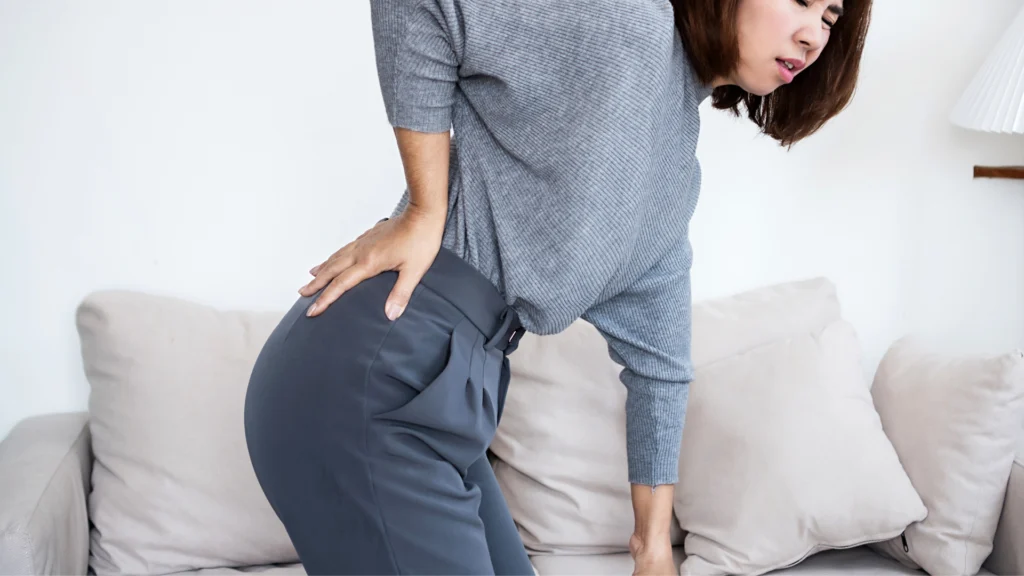
What your body is trying to tell you when pain shoots down your leg
You wake up and as you get up, you feel that electric pull going from your lower back down to your foot. Sometimes it's a dull ache. Other times it feels like a cramp that won't go away. And the worst part: you've already tried pills, heat, cold, rest... and the pain is still there.
If this sounds familiar, you're experiencing what millions of people go through every year: sciatic nerve pain.
Here's what few people tell you: according to a review published in the Cochrane Library (the world's most trusted medical source for clinical studies), cortisone injections—the “magic bullet” that so many doctors recommend— they only slightly reduce short-term pain and the evidence supporting it is limited. And according to a meta-analysis of 72 clinical trials with over 7,700 patients, after 3-6 months many patients experience a “rebound effect”: the pain returns.
So, what does work? How long will this pain really last? And when should you really worry? Keep reading, because by the end I'll reveal the specific sign that indicates the pain is worsening and needs urgent attention. It's information that could save you from unnecessary surgery or, worse, permanent nerve damage.
What is the sciatic nerve and why does it hurt so much?
The sciatic nerve is the longest and thickest nerve in your entire body. It exits the lower back (at the level of vertebrae L4, L5, S1, and S2), passes through the buttocks, and goes down the entire leg to the foot.
When that nerve is compressed or irritated, the sciaticaThat pain that travels the nerve's path. That's why the pain doesn't stay in the back; it travels.
What causes compression?
The most common causes are:
- Lumbar disc herniation. A disc between the vertebrae slips out of place and pinches the nerve.
- Piriformis syndrome. A deep gluteal muscle contracts and squeezes the nerve that runs very close by.
- Lumbar spinal stenosis. The space through which the nerve passes narrows (common with age).
- Spondylolisthesis. One vertebra slips over another.
- Pregnancy. The baby's weight and hormonal changes can compress the nerve.
- Prolonged poor posture or incorrect weightlifting.
- Blows or falls.
Leg pain: is it sciatica or something else?
Not everything pain going down the leg It's sciatica. Knowing how to identify it helps you find the right treatment.
Classic signs of true sciatica
- Pain that starts in the lower back or buttocks
- The pain “travels” down a single leg (rarely both at the same time)
- Tingling or “electric shock” sensation”
- Numbness in part of the leg or foot
- Muscle weakness (difficulty climbing stairs, lifting your foot)
- Worsens when coughing, sneezing, or straining during bowel movements
- It gets worse when you sit for a long time
How does sciatica feel
Some people describe it as a hot knife. Others, as a cramp that never ends. Others feel like their leg is “asleep” all the time. The intensity varies: from mild discomfort to pain that keeps you from sleeping.
If your pain is only in your back and does not go down your leg, it is not sciatica. If it goes down both legs or you lose control of your bladder or bowels, it is not common sciatica and you should seek medical attention immediately.
Sciatic nerve treatment: what the evidence supports
Let's get down to it. Here's an honest analysis of each treatment, based on what the studies say.
What DOES work
Stay active (with common sense). Absolute bed rest is ruled out. Studies show that more than 1-2 days in bed worsen recovery. The recommendation is light activity, short walks, and avoiding movements that trigger pain.
Alternating heat and cold. Applying cold for the first 48-72 hours reduces initial inflammation. Afterwards, heat relaxes tense muscles. A study published in the Journal of Pain Research Back this combo.
Over-the-counter (OTC) anti-inflammatories (short-term). Ibuprofen or naproxen can reduce inflammation in the early days. They are not a long-term solution and should not be taken without medical supervision if you have stomach, kidney, or blood pressure problems.
Specific stretching and nerve gliding exercises. This is probably the most powerful tool you have. I'll show you which ones later.
Guided physiotherapy. A physical therapist can apply manual therapy techniques, electrotherapy, and prescribe a personalized routine. Clinical evidence supports its effectiveness, especially in persistent cases.
Chiropractic care. For cases where the cause is mechanical (vertebral misalignment, muscle tightness, restricted movement), manual techniques and spinal adjustments can help release nerve compression.
Habit correction. How you sit, how you bear weight, how you sleep, how long you stay seated. These sustained changes are what prevent the pain from returning.
What offers LIMITED benefit
Epidural cortisone injections. As we've already seen, the Cochrane review and meta-analysis of 72 clinical trials with over 7,700 patients show that the relief is modest and short-term (weeks to a few months). They can be useful in very intense crises, but they do not resolve the cause.
Muscle relaxants. Useful in the short term if there is a lot of spasm, but they cause drowsiness and do not cure the underlying cause.
Antidepressants for nerve pain. In selected chronic cases, they can help, but they are not the first line.
What DOESN'T work (even though many people still believe it)
Absolute bed rest for days or weeks. Worsens recovery. Weakens muscles.
Lumbar belts for continuous use. They can help punctually when lifting weight, but if used always, they weaken the muscles that support your spine.
Traction. Current medical guidelines do not recommend it for common sciatica.
Ignoring the pain with the idea that “it will pass.”. There are cases where it doesn't happen, and others where it does but leaves after-effects (weakness, chronic tingling).
Taking pills all day without a diagnosis. Cover the pain while the cause continues to inflict harm.
Surgery: When is it Really Necessary
Surgery is only considered if:
- After 6-8 weeks of conservative treatment There is no significant improvement.
- Hi Progressive neurological weakness (the leg is getting weaker).
- Hi Loss of bowel control Surgical emergency.
- The pain is debilitating and other options have failed.
Orthopedic surgeon Dr. Stephen Hochschuler, co-founder of the Texas Back Institute, states it clearly in his work: if non-surgical methods do not provide relief after 6 to 8 weeks or if neurological deficits increase, surgery may be considered.
Inflamed sciatica: what to do in the first 72 hours
If you are in the middle of a crisis and wondering what to do with the Inflamed sciatica: what to do Right now, this is your step-by-step guide:
Day 1-2: Control Inflammation
- Apply cold wrapped in a cloth for 15-20 minutes every 2-3 hours on the lumbar and buttock of the affected side.
- Avoid absolute rest. Get up every hour and walk for 5 minutes.
- Sleep on your side with a pillow between your knees. If you sleep on your back, place a pillow under your knees.
- Avoid sitting for long periods. Standing or walking usually hurts less.
- Anti-inflammatories if your doctor approves them.
Day 3-7: Start moving
- Change the cold for heat (warm compresses 15-20 minutes, several times a day).
- Start the gentle stretches that you will see below.
- Short hikes, several a day, instead of a few long ones.
- Maintain correct posture when sitting (back supported, feet on the floor).
Day 7 onwards: Recover and Prevent
- Progressively increase activity.
- Incorporate ab and glute strengthening exercises.
- If you don't notice clear improvement in 2 weeks, consult with a professional.
Exercises that do help release the sciatic nerve
These exercises are based on physical therapy recommendations supported by publications from Spine-Health and area professionals. Do them slowly and never with sharp pain. Mild discomfort is normal. Sharp pain is a sign to stop.
1. Piriformis stretch (figure-4 stretch)
Lie on your back with your knees bent and feet on the floor. Cross the ankle of your affected leg over the knee of your other leg (forming a “4”). Bring both legs toward your chest. You will feel a deep stretch in your buttock. Hold for 30 seconds. Switch sides. Repeat 2-3 times.
Why it works: The piriformis muscle, when tight, compresses the sciatic nerve. Stretching it releases pressure.
2. Knee to chest
Lie on your back. With both hands, bring one knee towards your chest. Hold for 20-30 seconds. Switch legs. Repeat 3 times.
Why it works: Reduces pressure on the lumbar discs and the nerves exiting the spine.
3. Sciatic Nerve Slippage
Sit on the edge of the bed or a chair with your back straight. Slowly extend your affected leg forward while flexing your foot towards you (as if you wanted to touch your knee with your toes). At the same time, lower your chin to your chest. Then point your foot down and lift your chin. Do this 10-15 times slowly.
Why it works: It gently mobilizes the sciatic nerve, helping it regain its gliding ability.
4. Gluteal bridge
Lie on your back with your knees bent and feet flat on the floor. Squeeze your glutes and lift your hips to form a straight line from your knees to your shoulders. Hold for 5 seconds. Lower slowly. Repeat 10-15 times.
Why it works: Strengthens glutes and lower back, relieving pressure on the discs.
5. Hamstring Stretch (back of thigh)
Lie on your back with one leg bent. Place a towel under the heel of your extended leg and gently pull towards you until you feel a stretch behind your leg. Hold for 30 seconds. Switch sides.
Why it works: Tight hamstrings increase tension on the sciatic nerve.
Child's Pose (yoga)
Kneel on the floor, sit back on your heels, and stretch your arms forward, lowering your chest toward the ground. Breathe slowly and hold for 30 seconds.
Why it works: Gently decompresses the lumbar spine.
Recommended frequency: 1-2 times a day, every day. Consistent results start to be seen in 2-4 weeks.
How Long Does Sciatic Nerve Pain Last: What the Data Says
This is the question that causes the most anguish, and here is the honest answer based on what studies and clinical practice show:
Mild acute sciatica
Duration: 1-3 weeks. If your pain is mild, without weakness, and appears after a specific exertion, it will most likely improve within this range with conservative treatment.
Moderate acute sciatica
Duration: 4-6 weeks. Most typical cases—including those with a moderate herniated disc—resolve within this timeframe with conservative treatment (exercises, physical therapy, anti-inflammatories, postural adjustments).
Persistent sciatica
Duration: 6-12 weeks. The most complex cases require a more intensive approach. This is where physiotherapy, chiropractic care, and in some cases, more specific interventions make a difference.
Chronic sciatica
Duration: more than 12 weeks (3 months). When pain lasts longer than 3 months, it's already considered chronic. Treatment becomes more complex, and the goal shifts: not just to alleviate it, but to understand why the body isn't resolving the issue.
Key data for perspective
- Approximately 80–90% of the cases They are resolved without surgery.
- At 6 weeks, most patients notice significant improvement with appropriate treatment.
- The most important factor For a quick recovery, start the correct treatment in the first few days, don't wait for it to pass.
Habits that are unknowingly prolonging your pain
If your sciatica lasts longer than expected, check if you are doing any of these:
Sitting for more than 30-45 minutes at a time. The pressure on your lumbar discs dramatically increases when you sit. Get up every little while, even if it's just for 1 minute.
Lifting weights with a rounded back. Always bend your knees and hips, keep the weight close to your body, and don't twist your torso while holding weight.
Use the wallet in your back pocket. This causes a constant pelvic misalignment when sitting. Put it in your front pants pocket or carry a wallet.
Wearing shoes without support. Flat shoes without cushioning or high heels alter posture and increase the load on the spine.
Sleeping in an awkward position or on an inadequate mattress. Face down is the worst position. The ideal: on your side with a pillow between your knees, or on your back with a pillow under your knees.
Overweight. Every extra pound is additional pressure on your lumbar spine.
Smoking. It reduces blood flow to the vertebral discs and slows recovery. It is one of the lesser-known but most documented factors affecting spinal health.
Chronic stress. Tenses the lumbar muscles and gluteal muscles, perpetuating the pain.
The alarm signal that tells you NOT to wait any longer
I promised you at the beginning. Here it goes.
If your sciatica pain is accompanied by any of these symptoms, seek medical attention immediately. Not tomorrow. Today.
- Loss of bladder or bowel control You cannot hold in urine or feces, or conversely, you cannot empty them.
- Numbness in the genital area or between the buttocks Saddle anesthesia.
- Progressive leg weakness (it becomes harder for you to walk, climb stairs, or lift your foot).
- Your foot is falling asleep“ (fallen pie): you can't lift it properly when walking.
- Severe pain after a hard blow or fall.
- Fever accompanying the pain.
- Unexplained weight loss.
These signs can indicate a Cauda equina syndrome, a neurological emergency that requires urgent surgery to prevent permanent damage. This is not meant to scare you; it's information that can preserve your ability to walk normally for the rest of your life.
Your action plan to get started today
If you are reading this in active pain, this is your immediate plan:
Today
- Apply cold for 15-20 minutes to the affected lower back and buttock area.
- When you sleep, pillows between your knees if you sleep on your side, or under your knees if you sleep on your back.
- Avoid lifting heavy objects, bending over, and sitting for long periods.
This week:
- Begin gentle stretches (piriformis stretch, knee-to-chest, nerve glide).
- Walk several times a day, even if they are short distances.
- If the pain is very intense, consider anti-inflammatories under medical supervision.
In 2 weeks:
- If you don't see clear improvement, seek professional evaluation (physical therapist, chiropractor, or specialist doctor).
- Increase the frequency and duration of your workouts.
In the long run
- Strengthen your abs, glutes, and lower back.
- Correct posture and weight-bearing habits.
- Maintain a healthy weight and stay active.
Summary to remember the essentials
- The pain going down the leg Back pain is the hallmark of sciatica.
- In the Sciatic nerve treatment, The most effective combination is: therapeutic exercise + physical therapy/chiropractic care + habit correction. Injections and surgery are options reserved for specific cases.
- For the Inflamed sciatica: what to doCold for the first 72 hours, avoid complete rest, gentle exercises from day 3.
- Sciatica pain can last for a few days, weeks, or even months. The duration of the pain depends on the underlying cause and how it is treated.In most cases, it improves in 4-6 weeks with adequate treatment. More than 12 weeks is considered chronic.
- Neurological red flags (loss of bowel/bladder control, progressive weakness, foot drop) are emergencies.
Your body has an enormous capacity for recovery when you give it the right tools. Sciatica hurts, but in the vast majority of cases, it is completely reversible if you act in time and with the correct strategy.