Bone Setter Near Me How to find a trustworthy Latino chiropractor in the United States
Before the end of this article, you will understand why many Latinos in the U.S. are looking for “huesero near me” on Google... and end up making the wrong decision. There's a key difference that very few people know, and that can make the difference between relieving your back pain this week or enduring it for months. Keep reading.
What exactly is a “bone setter” and why do we look for them?
If you grew up in Mexico, Colombia, Guatemala, El Salvador, or any other Latin American country, you know exactly what a “huesero” is: that person from the neighborhood, sometimes a grandmother, sometimes an older man, who with their hands "adjusts" bones when your back, neck, or knee hurts.
It's part of our culture. It's trust. It's something that works because we've lived it since childhood.
But when you arrive in the United States and your back hurts, the problem is clear: Where do you find that here? You don't know anyone. You don't speak fluent English. And conventional doctors prescribe pills that only mask the pain without solving anything.
That's why you're looking “huesero near me” o “Latino bonesetter near me” In Google. It makes perfect sense.
💡 Key Data: According to the Pew Research Center, Hispanics account for more than 19% of the U.S. population. A large proportion of them prefer to receive medical care in Spanish, from professionals who understand their culture. The language barrier is one of the main obstacles to accessing quality health care.
The difference between a traditional bone setter and a professional chiropractor
Here's the part that few people honestly explain to you:
The traditional bone setter
It's someone who learned empirically, usually from generation to generation. They can alleviate certain muscle pains, and many people swear by it. However, they are not licensed, have no formal anatomy studies, and if something goes wrong (a herniated disc, an undetected fracture, spinal problems), there is no professional backing.
The certified Latino chiropractor
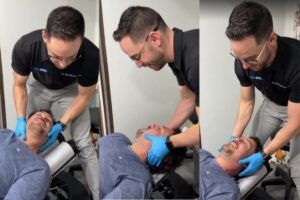
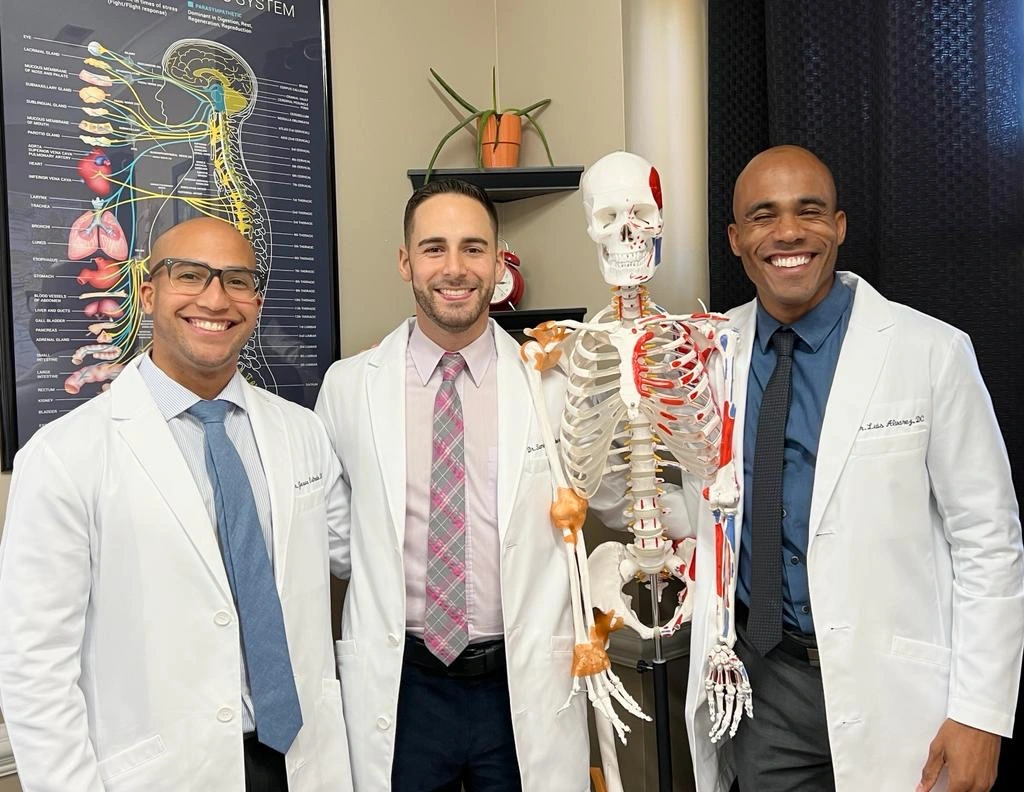
A Doctor of Chiropractic (D.C.) studies for between 7 and 8 years. They know the spine, nerves, muscles, and bones in detail. They use manual techniques very similar to those of a traditional bone-setter, but with scientific precision, X-rays if necessary, and a personalized treatment plan. And the best part: Many speak Spanish and understand our culture.
📚 Scientific backing
A meta-analysis published in the Journal of Manipulative and Physiological Therapeutics (2018) found that chiropractic spinal manipulation is effective for acute and chronic low back pain, with a significant reduction in pain compared to placebo. Furthermore, American College of Physicians Manual therapy (including chiropractic) is recommended as a first-line treatment for back pain, before medication.
Warning signs: When an “bonesetter” can hurt you
Not everything traditional is harmless. There are situations where going with someone unlicensed can worsen your condition:
- If you have a diagnosed or suspected herniated disc
- If the pain radiates to the arms or legs (sign of a pinched nerve)
- If there was a recent fall or accident
- If you are over 60 years old and have osteoporosis
- If the pain has not improved in more than 6 weeks
- If you have numbness or tingling in your extremities
In these cases, you need someone who will first assess, and then treat. That's exactly what a certified chiropractor does.
How to find a reliable Latino chiropractor in your area
If you are looking for huesero near me With reliable results, these are the real steps you should follow:
- Check the license: In the US, you can verify any chiropractor's license on your state's Department of Health website. If they aren't licensed, it's not safe.
- Read the Google reviews in Spanish: If there are Latino patients who have already visited and were satisfied, that's a positive sign.
- Call before you go and ask: Do you speak Spanish? Do you do initial evaluations? Do you accept my insurance or do you have payment plans?
- Trust clinics that explain the treatment: A good clinic like ChiroDuo will tell you what's wrong, why it's happening, and how they're going to treat it. If someone just “touches and charges,” be wary.
Expert fact
Dr. Jorge Herrera, a certified chiropractor and member of the American Chiropractic Association, The language barrier should not prevent a person from receiving quality care. Latinos deserve professionals who speak their language and understand that manual medicine is part of our cultural heritage.«
Why ChiroDuo It's the option for the Latin community
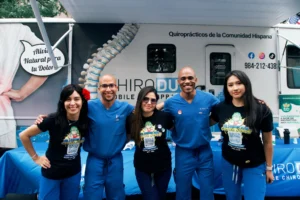
At ChiroDuo We understand exactly how you feel when you're looking for a bonesetter for back pain. Not because we read it in a book, but because we are part of this community.
What makes us different?
- ChiroDuo speaks Spanish — without translators, without misunderstandings, without the embarrassment of explaining your symptoms.
- Comprehensive evaluation before any treatment—first we understand your case.
- Manual techniques similar to the bonesetter tradition, but with scientific backing and clinical safety.
- Affordable treatment plans — because we know price matters.
- Personalized attention - you are not a number, you are a person with a real story, family, and pain.
Back Pain Chiropractor: What to Expect on Your First Visit
Many of our patients arrive nervous because they've never been to a chiropractor. Here's what typically happens:
- Medical history They ask you where it hurts, since when, and what makes it worse.
- Physical examination: They evaluate your posture, mobility, and reflexes.
- X-rays if necessary: To see the actual condition of your spine.
- Clear diagnosis: They explain what they found, in your language.
- Treatment Plan: How many visits, what techniques, what results to expect.
- First adjustment: Generally on that same visit, if it's safe.
There is no magic, but there is science. And science, when applied with care and with trained hands, does things that seem miraculous.
Ready to stop searching and start healing?
At ChiroDuo, we serve you in Spanish, with respect, with science, and with the heart of our Latin culture. Book your appointment at ChiroDuo
Frequently asked questions about bone setters near me
Is searching for a “bone setter near me” the same as searching for a chiropractor?
Not exactly, but they are closely related. When someone searches huesero near me, generally wants someone who uses manual techniques to relieve pain, speaks Spanish, and understands traditional Latin medicine. A certified chiropractor who is bilingual and culturally sensitive is basically the professional and safe version of a traditional bonesetter. At ChiroDuo, we offer exactly that: the essence of what you're looking for, with scientific backing and official licensing.
Is it safe to go to an unlicensed bone setter near me for back pain?
It depends on the case. For simple, uncomplicated muscle pain, the risk can be low. However, if there's an underlying condition like a herniated disc, spinal stenosis, osteoporosis, or an injury from an accident, going to someone unlicensed and without clinical training can seriously worsen the situation. The safest approach is always to start with a professional evaluation. A licensed chiropractor can tell you if your case is treatable with manual manipulation or if you need other medical attention first.
How do I know if the chiropractor I found searching “bone setter near me” actually speaks Spanish?
The simplest way is to call before you go and ask directly. You can also check Google reviews in Spanish: if there are comments from satisfied Latino patients, it's a good sign. Another option is to search directly for the clinic's website — if it's available in Spanish and mentions bilingual care, it's a clear indicator. At ChiroDuo, chiroduo speaks Spanish It's a central part of our identity, not an additional service. All attention, from reception to explaining the treatment, is done in your language.