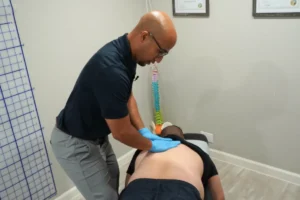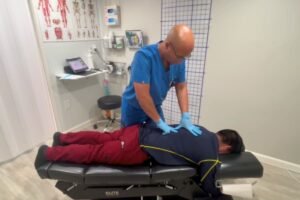
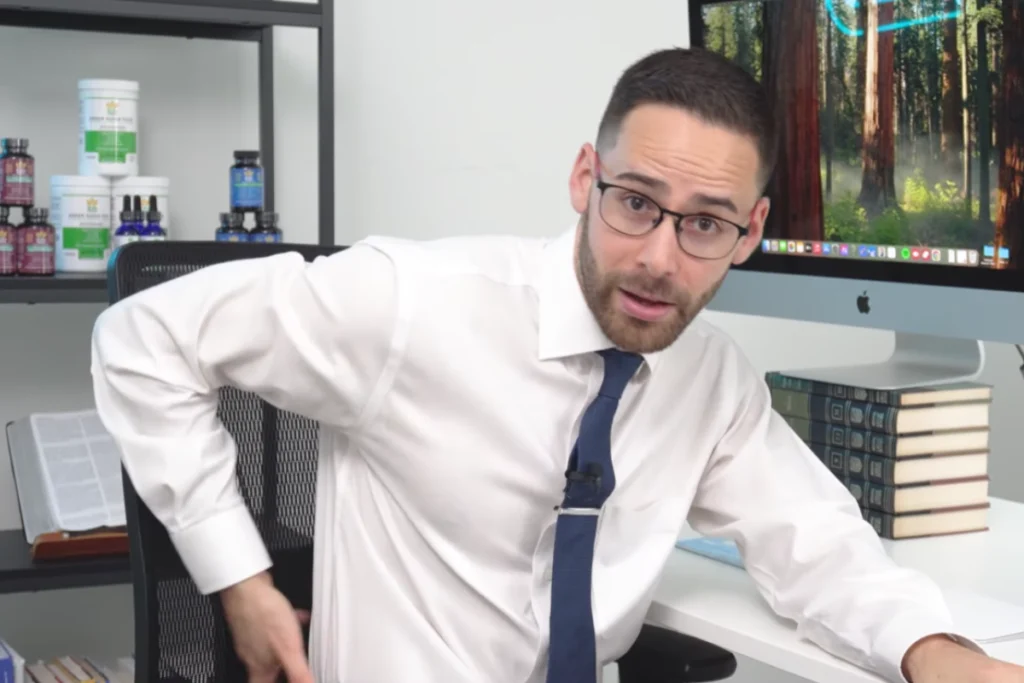
The low back pain It is one of the most frequent annoyances in adults, especially in people who spend many hours standing, stooping, or sitting, lift weights, or repeat the same movements daily. The good news is that, in many cases, it can be improved with a conservative and progressive approach: by understanding the Lower back pain causes, reduce irritation, regain mobility and strengthen to prevent relapses. If you want to read a general guide to self-care for lower back pain (what to do at home and when to consult a doctor), you can review this medical reference
Here are 7 common causes and a practical guide on how to relieve lower back pain and what exercises for lower back pain usually help (without improvising). And if you wish to see more articles related to back, neck, and sciatica, you can visit our blog here
Overload from sitting or standing for too long
When the body stays in the same posture for hours, the lumbar region becomes overloaded: some muscles work too hard and others “shut down.” This is typical in office work, driving, cash registers, cooking, warehouses, and factories.
What usually helps:
- Short breaks every 45-60 minutes
- Walk 2–5 minutes
- Ergonomic adjustments (chair, monitor, work height)
2) Lifting or carrying weight repetitively
Lifting boxes, bags, tools, or children every day puts stress on your lower back, especially if done while tired or without proper technique.
What usually helps:
- Reduce loads for a few days
- Reintroduce strength progressively
- Learn “hip hinge” strategies for lifting (not everything in your waist)
Lack of strength and stability (core and hips)
Many people believe that back pain is due to a “weak back,” but often the problem is a lack of support from the core system: deep abdominals, glutes, and hip control. Without stability, the lower back compensates.
What usually helps:
- Stability Exercises (not just stretching)
- Progressive glute and deep ab workout
- Consistency (little, but often)
4) Hip or mid-back (thoracic) stiffness
When the hips or the middle back don't move much, the lower back is forced to move excessively. This can lead to recurring lower back pain, especially when bending over or twisting.
What usually helps:
- Smooth hip and thoracic mobility
- Glute activation
- Avoid aggressive stretches that irritate
5) Sciatic nerve irritation (sciatica)
Sometimes lower back pain is accompanied by discomfort that travels down to the buttocks, thigh, or leg. This can indicate nerve irritation. It's not always a “hernia,” but it is a sign to be more careful with certain movements.
What usually helps:
- Avoid exercises that cause “electric shock” sensations”
- Movements that don't worsen leg symptoms
- Clinical Guide for Choosing Safe Progression
6) Stress and sustained muscle tension
Stress doesn't “imagine” pain, but it can increase muscle tension, sensitivity, and fatigue, especially in the neck, upper back, and lower back. Many people notice this when they sleep poorly or have been under a high mental load for weeks.
What usually helps:
- Walking and diaphragmatic breathing
- Real breaks during the day
- Short and consistent mobility/stability routine
7) Previous injury or unresolved recurrent episodes
If there was already a severe episode and recovery was only partial, it's common to be left with a fear of movement, stiffness, and relapses. The problem isn't that “the back was damaged,” but rather that strength and tolerance were not rebuilt.
What usually helps:
- Phased progression (pain → mobility → strength → maintenance)
- Avoid prolonged rest
- Reload with control, step by step
How to relieve lower back pain without medication (practical approach)
If there are no red flags (marked weakness, loss of bladder/bowel control, fever, pain after a hard blow), these steps usually help:
Reduce irritation without staying still
Avoid total rest. The ideal is to maintain tolerable movement:
- Gentle hikes
- Frequent posture changes
- Avoid “peaks” in load for a few days
Use the “bare minimum” every day
For most people, 5–10 well-chosen minutes daily beat a long, sporadic routine.
3) Start with low back pain exercises (3 safe options)
These are common basic exercises. The rule is: If something worsens the pain or it radiates down the leg, it needs to be adjusted..
- Glute bridge
Activate glutes and unload lower back. - Bird-dog (opposite arm/leg)
Improve stability and control without overloading. - Gentle pelvic tilt / breathing
Helps release tension and regain control.
Frequently Asked Questions
When should I worry about lower back pain?
If there is pain that worsens rapidly, significant weakness, loss of bladder/bowel control, fever, or pain after a hard blow, immediate medical evaluation is advisable.
How do I know if my pain is sciatica?
When pain radiates down to the buttock/leg or tingling/numbness appears, there may be nerve irritation. In such cases, it's advisable to be more careful with stretching and progression.
What's better: stretching or strengthening?
In most cases, both, but in the correct order. If you only stretch and don't strengthen, relapse is more likely.
The low back pain it should not become your normal. The key is to identify the most likely cause, reduce irritation, restore movement, and build strength with progression. With the right plan, many people achieve how to relieve lower back pain without relying on medication and return to their routine with more confidence.