
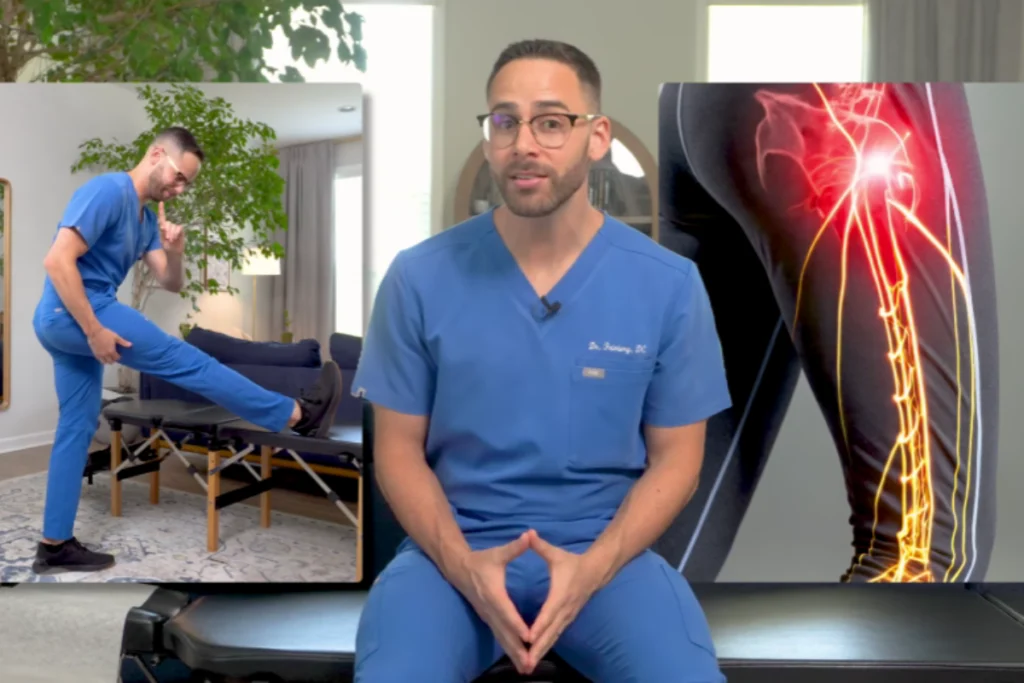
Search sciatica symptoms It's very common when pain appears not to stay only in the lower back, but to be felt in the buttock and run down the leg. In many cases, detecting these signs in time prevents the problem from becoming more intense or harder to manage. If you want to delve deeper with a more complete guide on this topic, here is a specific article from ChiroDuo about the sciatic nerve and how to relieve it
On this blog, you will find:
Early signs of sciatica that are worth taking seriously
How to recognize Tingling in the sciatic leg and other typical symptoms
Differences between muscle pain and possible nerve irritation
What exercises for sciatica Can you help me and which ones tend to get worse (according to the pattern)?
First: What is sciatica?
“Sciatica” is not a single diagnosis, but a set of symptoms that usually appear when the sciatic nerve is irritated or compressed. This can feel like pain, burning, electric shock, tingling, or numbness that travels down the leg. If you want a clear medical reference on what sciatica is and its most common symptoms, you can review This explanation from the Mayo Clinic:
Important: Not all pain that travels down the leg is sciatica, but when there are nerve symptoms, it's advisable to treat it with more care.
Sciatica symptoms: early signs you shouldn't ignore
- Pain in the buttock and leg (not just in the back)
A typical signal is the buttock and leg pain, as if the pain “traveled” along a line. Many people describe it as:
Pain that starts in the lower back or buttock and travels down the thigh/calf
Burning or sensation of “current”
Pain that increases with prolonged sitting - Tingling leg (sciatica) or numbness
The Tingling in the sciatic leg can feel like:
“Piquitos” or tickling
Numbness in calf, foot, or toes
Strange sensation when putting weight on my foot
If the tingling increases or becomes constant, it's a sign to stop “trying” random exercises. - Pain that worsens when sitting or driving
Sitting for a long time (especially in a car) can increase nerve irritation. If you notice that:
Sitting makes it worse.
Standing up and walking helps a little.
This pattern is frequent in paintings with a nervous component. - Pain that changes with sneezing, coughing, or straining
When pain increases with sneezing or coughing, some people feel a “whip-like” sensation down their leg. It doesn't always mean something serious, but it is an important clue to evaluate the case carefully. - Weakness or “giving out” in the leg
Watch out for signs like:
Your leg “goes out” when you walk
You feel less strength when climbing stairs
You're tripping more than usual
This is a more serious sign and warrants clinical evaluation. - The pain is going down further and further towards the foot.
A very useful rule of thumb:
If the pain “moves up” and stays closer to the back or buttock, it's usually a good sign.
If the pain “goes down” further and further towards the calf/foot, it's usually a bad sign (more irritation).
Is it sciatica or muscle? Quick difference
Sometimes a muscle (like the gluteus/piriformis) can refer pain down the leg. A common difference:
More muscular: localized pain, feeling of tightness, improves with heat/gentle massage, without marked tingling.
More nervous: shooting/burning pain, tingling/numbness, worsens when sitting, may go down to the foot.
If there is strong tingling or electric shock-like pain, it should be treated as nerve irritation until ruled out.
Sciatica Exercises: What Usually Helps (and What to Avoid)
There is no universal routine, but there are clear rules.
What usually helps
Walk gently (if tolerable)
Movements that do not shoot pain down the leg
Phased progression: first calm, then mobility, and then strength
What usually makes things worse
Aggressive nerve stretches (if you get “shocks”)
Repeated deep bending (bending over a lot) if it worsens symptoms
Intense routines without progression, especially when irritated
Golden rule: if an exercise increases pain going down the leg or increases tingling, adjust it.
When NOT to expect (red flags)
Seek urgent medical evaluation if you experience:
Loss of bladder or bowel control
Marked progressive weakness
Numbness in the genital/perineal area
Severe pain after a hard fall or with fever